

AI becomes part of the tourism demand
- Published in Soualiga Newsday Features TWO
- font size decrease font size increase font size
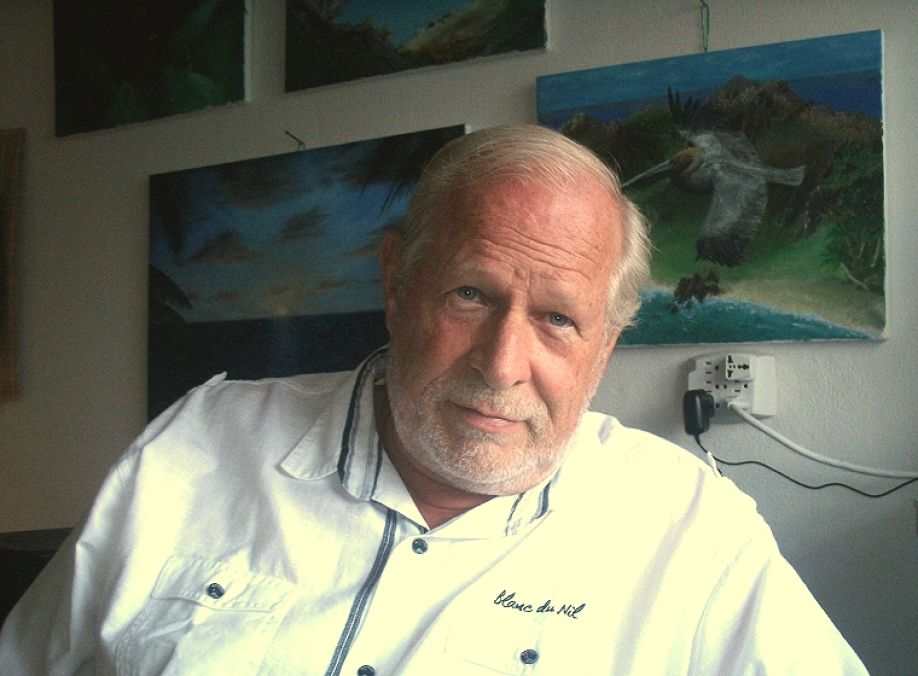 Cdr. Bud Slabbaert
SINT MAARTEN (COMMENTARY - By Cdr. Bud Slabbaert) - There is a genuinely underestimated AI problem for Caribbean tourism economies. The Caribbean may be preparing its tourism marketing for yesterday's traveler while tomorrow's traveler is asking AI where to go. The Caribbean used to compete for tourists’ attention. Increasingly, it will have to compete for AI’s recommendation.
Tourism destination promoters, hotels, airlines and airports should realize that the next customer may not find them. They may first have to be found by the machine that helps the customer decide where to go. That is a very different game.
AI doesn't care about tourism advertising campaigns, no matter how much effort and money is spent on promotion. If the issue increasingly includes AI, then foresight is not optional. It is a new way of tourism promotion planning.
Recent research strongly supports that AI-mediated search is becoming a new layer of tourism intermediation: instead of giving travelers hundreds of links to investigate, in seconds AI constructs a relatively small choice set and effectively decides which destinations enter the traveler's consideration in the first place.
The numbers are already significant. A 2026 industry study found that 54% of travelers had already used AI to plan travel, 40% had discovered a destination through AI, and 29% had changed their travel plans because of an AI recommendation. Yet only 26% of destination marketing organizations surveyed had a documented AI strategy. This creates a particular vulnerability for the Caribbean
New research has also found that the top five destinations accounted for 38% of AI recommendations. Nowadays people are using AI to ask questions before making decisions. Depending on what is asked, AI may say: “Based on what you're looking for, consider these five…” The five destinations in that answer have just won the first battle. That is the crucial economic issue.
An AI system isn't necessarily evaluating the destination based on the destination authority's advertising message. It is synthesizing information from the digital ecosystem: authoritative sources, travel publications, reviews, structured information, hotel and attraction information, transportation information, discussions, and other sources. This means digital representation is becoming part of destination competitiveness.
Recent academic research actually calls attention to this mechanism: destinations with greater digital representation and authoritative content may be more likely to enter AI-generated recommendation sets, while destinations that are attractive but poorly represented digitally can disappear from consideration.
For an island whose economy depends heavily on tourism, the future in terms of AI is this system being able to find detailed structured information rather than generic promotional copy. It isn't merely a marketing issue anymore but rather becoming an economic-development issue; building the digital evidence base from which AI forms its understanding of the destination.
If AI increasingly influences where people go, then an island's tourism revenue ultimately depends partly on whether the island is present in the AI-generated consideration set. A destination with all the excellent features that it may have can still be overlooked if its strengths are poorly represented in the information available to AI systems. AI could unintentionally reinforce other destinations that have stronger AI recognition and visibility.
Tourism authorities should prioritize AI discoverability alongside traditional advertising, social media and branding. Destination research highlights the importance of third-party sources, as AI answers often draw on information beyond a destination’s own website. Research also identifies recommendation patterns and emerging traveler behavior. AI may reshape tourism promotion, but it will likely reform tourism economics.
By Cdr. Bud Slabbaert