Soualiga
Menu

Soualiga (18673)

On historic day for climate action, Ban urges sustained momentum for better, safer future

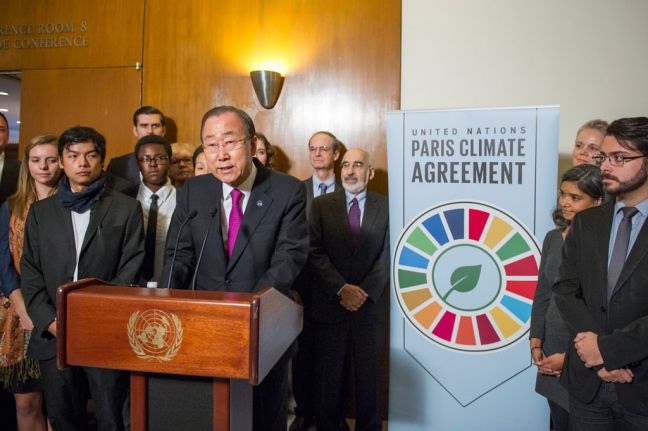
INTERNATIONAL, 4 November 2016 – As the Paris Agreement on climate change enters into force, United Nations Secretary-General Ban Ki-moon has called for the same determination going forward to implement the Agreement as well as to achieve the 2030 Agenda for Sustainable Development.

“We remain in a race against time. But with the Paris Agreement and the 2030 Agenda for Sustainable Development, the world has the plans we need to make the shift to a low-emission, climate-resilient path,” Mr. Ban told the press today at the UN Headquarters in New York.

“Now is the time to strengthen global resolve, do what science demands and seize the opportunity to build a safer, more sustainable world for all,” he added.

Now is the time to strengthen global resolve, do what science demands and seize the opportunity to build a safer, more sustainable world for all.

In early October, the Paris Agreement cleared the final threshold of 55 countries representing 55 per cent of global emissions required for the accord to enter into effect.

Its entry into force was extremely swift, particularly for an agreement that required a large number of ratifications and two specific thresholds.

The Agreement calls on countries to combat climate change and to accelerate and intensify the actions and investments needed for a sustainable low carbon future, and to adapt to the increasing impacts of climate change.

It also aims to strengthen the ability of countries to deal with the impacts of climate change and calls for scaled up financial flows, a new technology framework and an enhanced capacity-building framework to support action by developing countries and the most vulnerable countries in line with their own national objectives.

Further in his remarks today, Mr. Ban recalled that the present generation to really feel the effects of climate change and the last that can prevent its worst consequences.

He added that over the past decade, a “great global coalition” for climate action, including government officials, scientists, faith leaders, business executives and civil society activists around the world was forged and it recognized that the future of people and planet was at stake.

“They made today possible,” he said, highlighting: “Today shows us what is possible when we join forces for our common future.”

UN chief discusses role of civil society in the days ahead

Also today, the Secretary-General chief held a meeting with representatives of civil society groups to discuss with them how their organizations could contribute to the objectives of the Paris Agreement, as well as their visions and concerns.

In his remarks, Mr. Ban thanked the civil society for their courage, persistence and leadership in realizing the Paris Agreement and called on them to “keep up the fight”, to press for action and to hold governments accountable.

“Your voices at the time were clearly heard by the leaders who attended the climate meeting [in Paris last year],” he said. “You showed the climate challenge stakes – and the solutions.”

The discussion with the civil society was moderated by David Nabarro, Special Adviser on 2030 Agenda for Sustainable Development, and attended by a number of representatives of civil society groups from all over the world.

Participating in today’s even were: Keya Chatterjee, Executive Director, US Climate Action Network (on behalf of CAN-International); Angie Fyfe, Executive Director USA, ICLEI – Local Governments for Sustainability; and Naomi Ages, Climate Liability Campaigner, Greenpeace.

Pre-recorded video messages were also delivered by: Sharan Burrow, General Secretary, International Trade Union Confederation (ITUC); Alina Saba, Researcher, Mugal Indigenous Women’s Upliftment Institute, Nepal & Asia Pacific Forum on Women, Law and Development; Winnie Byanyima, Executive Director, Oxfam International; and Kathy Jetnil-Kijiner, Instructor, College of the Marshall Islands & Co-Director, Jo-Jikum.

Adopted by 196 parties to the UN Framework Convention on Climate Change (UNFCCC) last December in Paris, the Paris Agreement’s central aim is to strengthen the global response to the threat of climate change by keeping the global temperature rise this century well below 2 degrees Celsius above pre-industrial levels and to pursue efforts to limit it to 1.5 degrees Celsius.

On Monday, the next meeting of Parties to the UNFCCC, known by the shorthand COP 22, kicks off in Morocco’s Marrakech.
Read more...

ISIL moving ‘trucks full of abducted civilians’ to Mosul as shields against airstrikes – UN warns

INTERNATIONAL, 4 November 2016 – The Office of the United Nations High Commissioner for Human Rights (OHCHR) today warned that the Islamic State of Iraq and the Levant (ISIL/Da’esh) fighters have taken some 1,600 civilians to Mosul city in an attempt to shield themselves from airstrikes, and that nearly 400 women from Kurdish, Yezidi or Shi’a Muslim communities in Tal Afar are now being held captive.

Further reports stated that 180 people were killed on Wednesday in the town of Kokja in eastern Mosul and potentially an additional 200 in Mosul. OHCHR is working to verify the details.

ISIL has taken “trucks full of abducted civilians” from Hamam al-Alil to Tal Afar city. Some of the families were told that they would be going to Syria.

On Wednesday, 150 families were moved from Hamam al-Alil to Mosul. ISIL used loudspeakers to order residents of the villages of Lazagha and Arij (5 kilometres from the centre of Hamam al-Alil) to either leave their homes or be severely punished.

Since 17 October, ISIL militants have been forcibly recruiting children as young as nine and 10 to fight in Mosul.

Meanwhile, the OHCHR continues to receive reports of mass killings, including a report on Monday that ISIL killed 50 of its own militants in the Ghazlani military base in Mosul for alleged desertion.

The UN human rights wing raised concerns about air strikes against civilians, which reportedly killed four women and 17 other civilians in the al-Qudus neighbourhood in eastern Mosul on Wednesday evening.

“We remind the Government and its allies that all military operations, as well as security screening of people, must be carried out in full compliance with international humanitarian law, and that they must strictly abide by the principles of humanity, distinction, proportionality, necessity and precautions to minimize loss of civilian life,” said OHCHR spokesperson Ravina Shamdasani.

Meanwhile, the International Organization for Migration (IOM) Iraq Displacement Tracking Matrix (DTM) today recorded a total of 22,224 individuals displaced by fighting in the Mosul region that began on October 17.

The largest number of these internally displaced people (IDPs) is in Ninewa governorate, where 3,577 families, or 21,462 individuals. have been recorded, (about 97 percent of the total displaced by the current Mosul emergency). Others have been displaced to Anbar and Erbil governorates.

According to the agency, since the beginning of the Mosul operations, the cumulative number of IDPs reached 4,182 families, corresponding to 25,092 individuals (from 17/10–3/11). The 22,224 individuals reported today (04/11) are those still in displacement. An estimated 3,300 recent IDPs returned to their communities between 18 October and 3 November.

On Wednesday, IOM Iraq released its Mosul Crisis Response Revised Funding Gap report, which outlines the revised needs and estimated funding gaps for shelter support, including establishment of emergency sites; provision of non-food relief items; emergency health services; delivery of psychosocial services; emergency livelihoods and social cohesion activities.

“IOM has had to redirect the funding for its humanitarian response to the establishment of emergency sites,” explained IOM Iraq Chief Mission Thomas Lothar Weiss. “Redirecting funds, coupled with the increased needs in some sectors, means widening the funding gaps for the provision of humanitarian life-saving assistance to the affected population.”

Read more...

‘Climate action starts in the kitchen,’ says UN, launching #Recipe4Change campaign

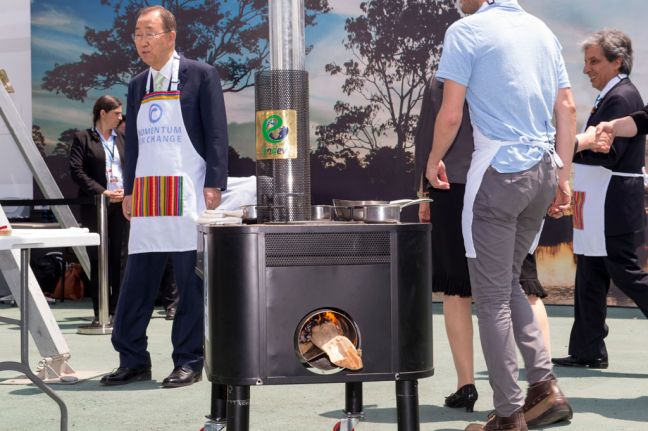
INTERNATIONAL, 4 November 2016 – With the Paris Agreement on climate change entering into force today, famed chefs Joan, Josep and Jordi Roca are joining the United Nations Sustainable Development Goals Fund (SDG Fund) to tackle climate change from a different perspective: sustainable cooking.

“Food should not be a threat to sustainability, but a source of more sustainable development,” said the Roca brothers, in a news release.

Over the next three months, the brothers – UN Development Programme (UNDP) Goodwill Ambassadors for the SDG Fund – will offer cooking challenges that invite social media users on Facebook, Twitter and Instagram to submit sustainable recipes (#Recipe4Change).

“The beginning of the Paris Agreement also marks a new chapter for humanity and demonstrates that countries are serious about addressing climate change. More importantly, a greater understanding of climate change can be set in motion in our own communities and kitchens,” they said.

In early October, the Paris Agreement cleared the final threshold of 55 countries representing 55 per cent of global emissions required for the accord to enter into effect.

To achieve the SDGs, there must be a greater awareness and understanding of how people’s food choices can impact sustainability, health and the environment. By putting sustainable cooking at the forefront of their restaurant’s mission, the Roca brothers are eager to share their expertise, provide fresh approaches, and offer more resilient food practices.

Simple changes in cooking can contribute to the 2030 Agenda for Sustainable Development, especially food sourcing, waste reduction and preparation can contribute to better food security and nutritional outcomes.

As part of the #Recipe4Change contest, the Roca brothers will pose a series of monthly challenges, selecting one winning recipe for each of these challenges. At the end of the contest, the Rocas will recognize a global winner among all of the recipes received during the contest.

The winner will spend a day with the chefs in their celebrated restaurant, El Celler de Can Roca in Spain, where they will have the opportunity to prepare the winning recipe in the Rocas’ kitchen and dine with the chefs.

Along with monthly sustainable food challenges, the Roca brothers will share regular tips and techniques to reduce the impact of cooking on the environment. They will offer best practices and ideas designed to mitigate climate change as well as cooking methods that reduce energy consumption and water usage, and enhance food preservation.

“The challenges of food security are complex and require more integrated approaches to mitigate the effects of our changing climate,” said Paloma Duran, Director of the SDG Fund.

With one in five people still lacking access to electricity and more than 1.8 billion without clean water, “we must rethink how we prepare, store and transport food. The Roca brothers serve as important champions for our ongoing work on this vital issue,” she stressed.

“Tackling climate change and achieving the SDGs should be a collective effort that involves governments, business, international organizations, but also citizens who can everyday make small but meaningful decisions in how they cook and what they eat,” she added.

Read more...

Displaced amid Mosul offensive, close to 10,000 children in urgent need of aid, says UNICEF

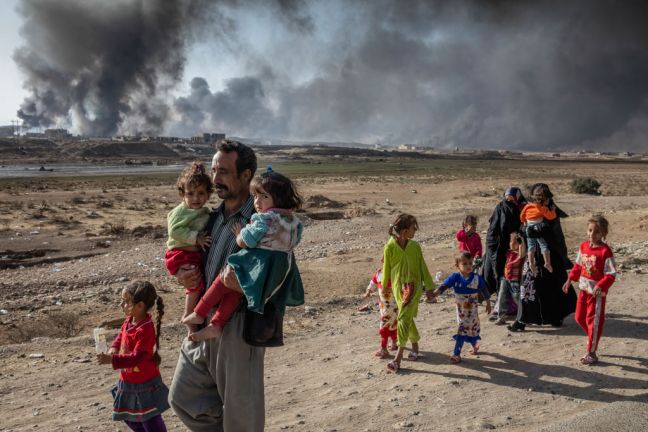
INTERNATIONAL, 3 November 2016 – Some 20,700 people have been displaced since the operation to liberate the Iraqi city of Mosul from terrorists started on 17 October, the United Nations Children’s Fund (UNICEF) said today, estimating that 9,700 of them are children in urgent need of assistance.

“I met mothers and children who were so relieved to have come out alive; it was clear that they had gone through so much,” said Pernille Ironside, UNICEF’s Chief of Field Operations in Iraq, following a visit to Nargizlia screening site.

The Iraqi Government and its international partners are fighting to retake Mosul from the Islamic State of Iraq and the Levant (ISIL/Da’esh) while the UN agencies and its partners are stepping up humanitarian assistance for the displaced.

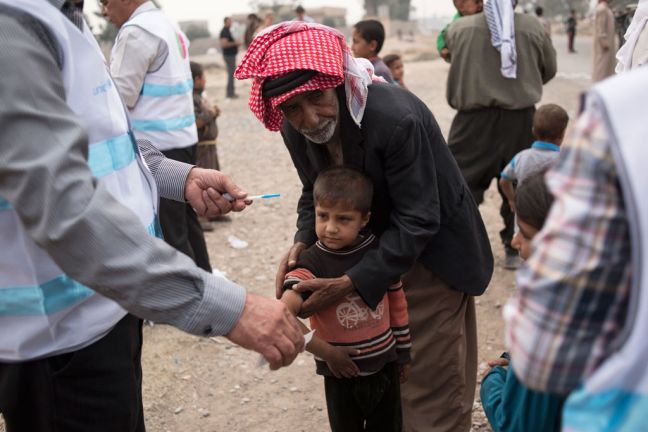
Many of the new arrivals come in dusty, exhausted and uncertain about what is going to happen next. Some are even barefoot. UNICEF reaches out to the families, checking on the condition of their children and finding out if any of them are missing.

“As the situation continues to unfold, it is important that we remain nimble and that we adapt our response to best assist children and families who have been through so much over these past years,” Ms. Ironside said.

Upon arrival, families receive clean drinking water and snacks that include a nutritional supplement for children. Children 6 months to 15 years old are immediately immunized against polio and measles – many of them for the first time in two years – by a UNICEF-supported local government team.

Families spend up to half a day in screening sites before being transferred to an emergency camp where they are assigned shelter.

There, UNICEF ensures that water, showers and clean latrines are available. Children are screened for malnutrition, and treated accordingly, and UNICEF-supported mobile teams provide psychological care for children.

UNICEF is also preparing temporary learning spaces and recreational activities for children in the camps.

While many people have fled and are staying in camps, others have chosen to remain in their newly retaken villages. UNICEF is adapting its response to reach all populations in need.

In October, UNICEF delivered bottled water and hygiene supplies for more than 1,500 families, and vaccinated children against polio in two newly retaken communities. Conditions for both displaced and local children and families in these communities are very poor, with families in desperate need of clean water and other essential supplies.

Read more...

UN Security Council ‘strongly condemns’ ceasefire violations in Mali

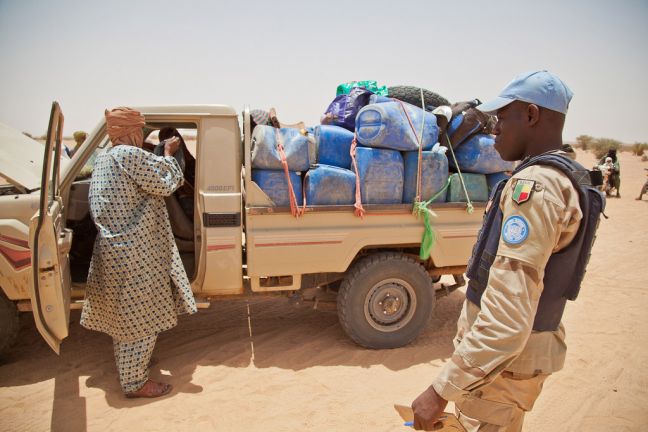
INTERNATIONAL, 3 November 2016 – Strongly condemning repeated violations of the ceasefire arrangements by the Plateforme and Coordination in and around northern Mali’s restive Kidal town, the United Nations Security Council today warned that such acts threaten the viability of the peace agreement in the country and called on the armed groups to immediately cease hostilities and return to dialogue.

In a Presidential Statement issued by the Council after consultations, the 15-member body “urged the Government, and the Plateforme and Coordination armed groups to fully and sincerely maintain their commitments under the Agreement [on Peace and Reconciliation in Mali].”

“The Security Council also recalled its readiness to consider targeted sanctions against those who take actions to obstruct the implementation of the Agreement as well as those who resume hostilities and violate the ceasefire, as expressed in its resolution 2295 (2016),” the Statement added.

The Security Council also urged the Government to engage with the UN Secretary-General, through his Special Representative for Mali, to establish “concrete benchmarks and timelines” to assess the progress toward the implementation of the Agreement as well as on members of the Comité de suivi de l’Accord and other relevant international partners to continue their support to the Agreement’s implementation.

Expressing concern over the expansion of terrorist and other criminal activities across the country, and, in particular, into central and southern Mali, as well as the intensification of intercommunal violence in the centre of Mali, the Council emphasized that the national authorities have the primary obligation for the provision of stability and security throughout the country’s territory.

Additionally, strongly condemning attacks, including terrorist attacks, against the Malian defense and security forces, the UN Multidimensional Integrated Stabilization Mission (MINUSMA) and the French forces that support it, the Council stressed the need to bring the perpetrators, organizers, financiers and sponsors of such acts to justice.

Also in the statement, the Security Council further expressed serious concern over the insecurity that hinders humanitarian access, as well as attacks against aid workers, and emphasized the need for all parties to respect the principles of humanitarian assistance.

The Security Council also emphasized the need for all parties to ensure the safety and protection of civilians receiving assistance and the security of humanitarian personnel operating in Mali.

The Malian Government has been seeking to restore stability and rebuild following a series of setbacks since early 2012, including a military coup d'état, renewed fighting between Government forces and Tuareg rebels, and the seizure of its northern territory by radical extremists. The country has also been wracked by a series of humanitarian crises.

Read more...

‘Dramatic’ action needed to cut emissions, slow rise in global temperature – UN Environment report

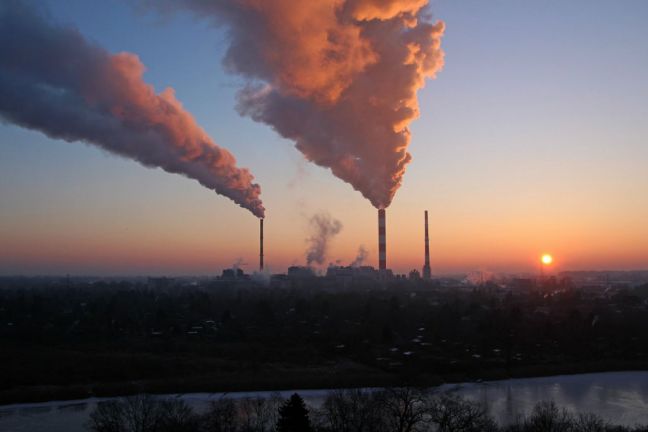
INTERNATIONAL, 3 November 2016 – A day before the landmark Paris Agreement on climate change comes into force, the United Nations Environment Programme (UNEP) is urging the world to ‘dramatically’ step up its efforts to cut greenhouse gas emissions – by some 25 per cent more than those pledged in Paris last year – “to meet the stronger, and safer, target of 1.5 degrees Celsius” global temperature rise.

The world is still heading for temperature rise of 2.9 to 3.4? this century, even with the pledges made last December by States Parties to the UN Framework Convention on Climate Change (UNFCCC), according to UNEP, which explains, “this means we need to find another one degree from somewhere […] to have any chance of minimizing dangerous climate change.”

UNEP made the announcement today in London as it released its annual Emissions Gap report, which found that 2030 emissions are expected to reach 54 to 56 gigatonnes of carbon dioxide equivalent. The projected level needed to keep global warming from surpassing 2°C this century is 42 gigatonnes.

In early October, the Paris Agreement cleared the final threshold of 55 countries representing 55 per cent of global emissions required for the accord to enter into effect, now set for tomorrow. The next meeting of Parties to the UNFCCC, known by the shorthand COP 22, kicks off Monday in Marrakech.

Scientists around the world agree that limiting global warming to 2°C this century (compared to pre-industrial levels) would reduce the probability of severe storms, longer droughts, rising sea levels and other devastating climate-related events. However, they caution that even a lower target of 1.5°C will reduce rather than eliminate impacts.

Erik Solheim, Executive Director of UNEP, said in a new release that while the Paris Agreement and the recent Kigali Amendment to the Montreal Protocol to reduce hydrofluorocarbons (HFCs), are steps in the right direction, the strong commitments are nevertheless still not enough.

“If we don’t start taking additional action now, beginning with the upcoming climate meeting in Marrakech, we will grieve over the avoidable human tragedy. The growing numbers of climate refugees hit by hunger, poverty, illness and conflict will be a constant reminder of our failure to deliver,” he said.

That stark warning echoed his call from the report’s forward, where he said: “None of this will be the result of bad weather. It will be the result of bad choices by governments, private sector and individual citizens. Because there are choices […] The science shows that we need to move much faster.”

2015 was the hottest year ever recorded and the first six months of 2016 have thus far broken all prior records. Yet the report finds that emissions continue to increase.

Last month, the Kigali Amendment to the Montreal Protocol agreed to slash the use of HFCs. According to preliminary studies, this could lead to a cut in 0.5°C if fully implemented, although significant reductions will not be realized until 2025. Collectively, members of the G20 are on track to meet their Cancun Agreements for 2020, but these pledges fall short of a realistic starting point that would align targets with the Paris Agreement.

Fortunately, the report released today has found, through technology and opportunity assessments, a number of ways for States and non-State actors to implement further cuts that would make the goals achievable, including energy efficiency acceleration and crossover with the Sustainable Development Goals (SDGs).

For example, non-State actors, including those in the private sector, cities, and citizen groups, can help to reduce several gigatonnes by 2030 in areas such as agriculture and transport.

Energy efficiency is another opportunity; a 6 per cent increase in investments last year (a total of $221 billion) in the industry indicates that such action is already happening.

Moreover, studies have shown that an investment of $20 to $100 per tonne of carbon dioxide would lead to reductions (in tonnes) of 5.9 for buildings, 4.1 for industry, and 2.1 for transport by 2030.

The 1 Gigaton Coalition, created by UNEP with the support of the Government of Norway in 2014, recently found that implementing renewable energy and energy efficiency projects in developing countries from 2005 to 2015 will lead to a half gigatonne reduction in emissions by 2020. This includes actions taken by countries that have not made formal Cancun pledges.

Climate action is integral to the SDGs, as the impacts of severe climate-related events undermine our ability to deliver on the promises made by 2030. Failure to meet these challenges will, of course, have greater-yet implications beyond that date.

Read more...

UN officials emphasize the need for coherence and coordination to achieve 2030 Agenda

INTERNATIONAL, 3 November 2016 – Meeting in Rome with members of the Food and Agriculture Organization (FAO) the president of the United Nations Economic and Social Council (ECOSOC) highlighted the “universal and inspirational” nature of the 2030 Agenda, adding that it is a tremendous benefit for system-wide coherence and coordination across all UN agencies.

“More than ever, the UN system will be required to leverage on the distinct expertise and comparative advantages of its parts in order to ensure cohesion and avoid duplication in implementing this cross cutting Agenda,” stated Frederick Musiiwa Makamure Shava, in a speech to FAO permanent representatives at an informal seminar that also included officials from the World Food Program (WFP) and International Fund for Agricultural Development (IFAD).

Mr. Shava also complimented the work that FAO has done in areas of security, nutrition, agriculture, fisheries, and livestock, adding that the organization has worked very hard to eradicate hunger, and that its role is critical “for the achievement of the entire Agenda.”

In an opening statement, FAO Director-General Jose Graziano da Silva stressed the importance of closer and more coherent collaboration among all partners, including within the UN system, due to an “overlapping and closely interconnected” nature of the Sustainable Development Goals (SDGs).

Both bodies have a common goal to make sustainable industrialization the thematic focus of their approach. FAO has agreed to help with a preparatory meeting on agroindustry in Victoria Falls, Zimbabwe, early next year.

FAO’s major approach on the ground remains focused on fostering inclusive value chains for small farmers in developing countries, and more decent employment in rural areas. The organization is also the custodian for 21 of the indicators to be used to measure progress of the SDGs.

Furthermore, FAO plans to increase its contributions to the 2030 Agenda through the creation of a new senior post, responsible for SDG implementation activities. According to Mr. Graziano da Silva, a new Office of the Chief Statistician will be created oversee the project and work under the new Deputy Director-General for Programmes.

He also stressed that FAO is strongly aware of the importance of deepening our collaboration with other organisms of the UN system, especially between the three UN Rome-based agencies, adding that FAO, WFP and IFAD are working very closely on the issue, and will present a joint report before the end of the year.

Read more...

Ban welcomes announcement of adoption of new Constitution in Côte d'Ivoire

INTERNATIONAL, 3 November 2016 – United Nations Secretary-General Ban Ki-moon welcomed today the announcement of the adoption of the new Constitution in Côte d'Ivoire by the Commission Electorale Indépendante, which followed the 30 October constitutional referendum.

In a statement issued by his spokesperson, Mr. Ban noted with satisfaction that the new Constitution addresses of some long-standing causes or tension and divisions in Côte d’Ivoire.

Further to the statement, all Ivorian parties, including political leaders and their supporters, were encouraged to reject violence and refrain from the use of inflammatory language. The Secretary-General stressed the importance of resolving the conflict through constitutional means, through dialogue, leading to fair and open elections in the weeks ahead.

The Secretary-General also assured, through his Special Representative and Head of the UN Operation in Côte d’Ivoire (UNOCI) that the UN is highly committed to maintaining peace and stability in Côte d’Ivoire.

 
Read more...

Afghanistan: International support to Kunduz remains essential, says UN Mission

INTERNATIONAL, 2 November 2016 – The United Nations will do everything in its power to support the people of Kunduz in, the political chief of UN mission in Afghanistan told Government officials, civil society and media professionals in the restive northern province, where the security situation has remained tense since the provincial capital was briefly overtaken by the Taliban in late 2015 and was attacked again in October this year.

“The United Nations stands with the people of Kunduz and is firmly committed to backing all efforts that lead to peace,” said Pernille Kardel, the Secretary-General’s Deputy Special Representative for Afghanistan and acting head of the UN Assistance Mission in Afghanistan (UNAMA).

“The international community is highly aware of the challenges the people of Kunduz have faced, and remains steadfast in backing the people of Afghanistan in recovering from the violence of the past and moving toward peace,” she said.

According to a news release issued yesterday by UNAMA, Ms. Kardel discussed recent security developments and other issues with Governor Haji Asadullah Omarkhel and Kunduz leaders in a daylong visit to the province.

In a separate meeting, Ms. Kardel discussed the latest developments with senior media professionals working in Kunduz. Following the expulsion of the Taliban from Kunduz last October, radio broadcasts and other media programmes in the city resumed in March this year thanks in part to several UN initiatives.

Two local radio stations restarted broadcasts in March – Shaeesta Radio, a radio network dedicated to women’s issues, and Kaihan Radio, which broadcasts shows geared to young Afghans.

Both stations were looted during the Taliban’s attack and takeover of Kunduz between 28 September and 13 October2015, and their staff forced into hiding. But with assistance from the UN Development Programme (UNDP) in the country, damaged station equipment has since been replaced.

UNAMA has been supporting Kunduz radio and TV through a combination of technical assistance and outreach activities. Following the end of fighting in the city in October 2015, UNAMA supported the people of Kunduz by backing a series of public information programmes with Kunduz RTA and Independent Radio Kunduz. The broadcasts aired via four local radio and TV channels.

Many other outreach events have taken place in Kunduz this year, including most recently an event to mark the International Day to End Impunity for Crimes against Journalists on 2 November.

More than 20 different UN entities are present in Afghanistan, working to support Afghans through a broad spectrum of development and humanitarian activities, including through support for development planning, resource mobilization, and coordination of international donors and organizations.

UNAMA is mandated to support the Afghan Government and the people of Afghanistan as a political mission that provides good offices; promotes coherent development support by the international community; supports the process of peace and reconciliation; monitors and promotes human rights and the protection of civilians in armed conflict; promotes good governance; and encourages regional cooperation.

‘Good offices’ are diplomatic measures UN takes publicly and in private, drawing on its independence, impartiality and integrity, to prevent international disputes from arising, escalating or spreading.

Read more...

Politics prevailed over promises by France and UK in handling of children at Calais ‘Jungle’ – UN experts

INTERNATIONAL, 2 November 2016 – The Governments of France and the United Kingdom fell seriously short of their obligations under the international child rights convention by inadequately handling the situation of minors living at the Calais migrant camp in France, the United Nations Committee on the Rights of the Child has said.

The Office of the UN High Commissioner for Refugees (UNHCR) has reported that it is assisting France, which decided to close the refugee and migrant camp in Calais, that has become known as ‘the Jungle,’ as it is “not fit for human habitation.”

The people in the camp have been transferred to accommodation centres throughout France, and a number of unaccompanied children left the camp for the United Kingdom, where they have family ties. The refugee agency highlighted the need for greater responsibility sharing and coordination between European Union member States.

According to a news release today from the Office of the UN High Commissioner for Human Rights (OHCHR), France and the UK have some disagreements over who should take responsibility for the majority of unaccompanied children and this situation has led to major violations of these children’s rights.

“Hundreds of children have been subjected to inhumane living conditions, left without adequate shelter, food, medical services and psychosocial support, and in some cases exposed to smugglers and traffickers,” the experts said.

The Committee – tasked with monitoring worldwide implementation of the Convention on the Rights of the Child by States Parties – called on the two countries to urgently address the situation of unaccompanied children who had been forced to take shelter in disused shipping containers or sleep outside.

“The events of the past week have shown clearly that political and other considerations prevailed over the initial promises by both Governments that the situation of unaccompanied children would be their priority. The best interests of the child have been completely disregarded,” the experts said.

While welcoming the announcement by the French authorities that the children are being relocated to dedicated centres where the next steps concerning their future will be decided, the Committee is of the view that both Governments cannot say they were caught off-guard by the Calais situation.

“When the Committee reviewed France and the UK earlier this year, both States were given precise recommendations regarding the treatment of unaccompanied child migrants, including those in Calais,” the release explained.

These recommendations included the need to stop the detention of asylum-seeking and migrant children; the need to conduct age assessments only in cases of serious doubt and when so, through multi-disciplinary and transparent procedures; and the obligation to respect children’s right to humane living standards and adequate health care services.

“The failures regarding the situation of children in Calais are not isolated events but highlight the shortcomings of a migration system built on policies that are neither developed nor implemented with child rights in mind,” the experts underscored.

Read more...
Subscribe to this RSS feed

Soualiga Radio