Soualiga
Menu

Soualiga (18673)

Indigenous peoples’ voices must be heard at Paris climate change conference, UN agency says

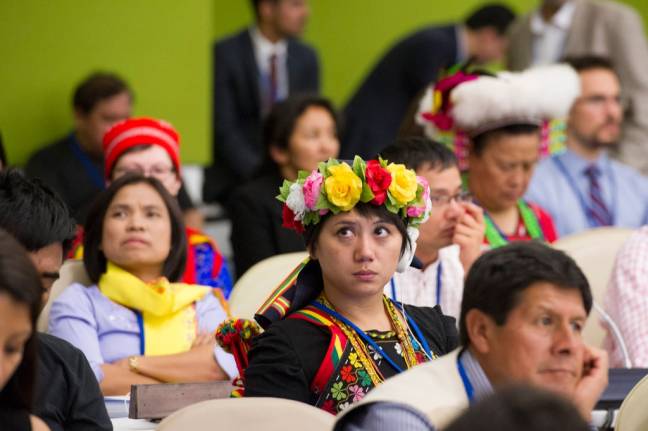
INTERNATIONAL – Indigenous peoples own, occupy or manage up to 65 per cent of the Earth’s land surface, yet they have largely been excluded from national plans prepared for next month’s United Nations climate change conference in Paris, according to the UN Development Programme (UNDP), which is working to address the issue.

Together with the International Indigenous Peoples’ Forum on Climate Change, UNDP is bringing indigenous leaders and high-level government officials together, often for the first time, to ensure that the priorities of indigenous peoples, whose lands are often seized for intensive greenhouse gas-emitting development, are embedded in national proposals for the conference, widely known as COP21.

“This pioneering initiative, underway in 21 countries around the world, aims to ensure that the global climate agreement reached in Paris recognizes indigenous land and natural resource rights, and the crucial role of indigenous peoples in climate change mitigation,” UNDP said in a news release.

It highlighted research showing that secure rights to indigenous and community-held land protect against deforestation, which with other land uses represents 11 per cent of global carbon dioxide emissions blamed for climate change.

It noted that a review by the UN Framework Convention on Climate Change (UNFCCC) of 119 national plans to combat the problem submitted as of last month makes no mention of indigenous peoples.

Forests owned and controlled by indigenous peoples and local communities contain about 37.7 billion tons of carbon, 29 times more than the annual emissions of the world’ passenger vehicles, according to estimates by the World Resources Institute and Rights and Resources Initiative.

But more than 80 per cent of all lands utilized or occupied by indigenous peoples lack legal protection, and are highly vulnerable to being seized by private companies, individuals, and governments themselves, in a non-stop drive toward carbon-intensive investments in agriculture, logging, mining, oil and gas, dams and roads, and tourism.

“The same development that fuels climate change, continues to rob indigenous peoples of their human rights,” Victoria Tauli-Corpuz, UN Special Rapporteur on the Rights of Indigenous Peoples, said, stressing the need to protect those right and the traditional knowledge that has kept ecosystems healthy.

Read more...

Settling Israeli-Palestinian conflict would help curb terrorism, says UN Middle East envoy

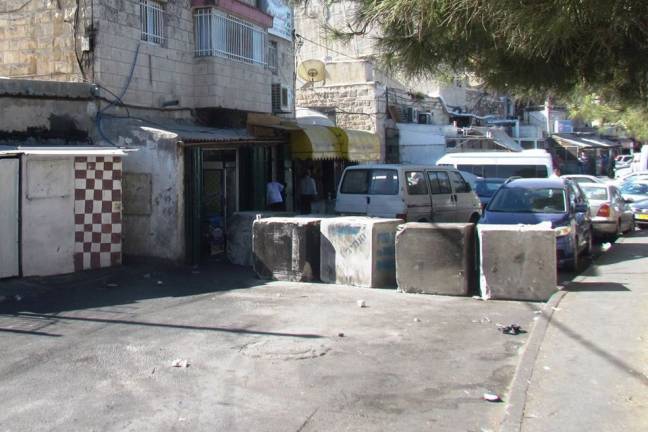
INTERNATIONAL – Resolving the Israeli-Palestinian conflict would help counter the extremism behind the “abhorrent terrorist attacks" in Paris, Beirut and the Sinai, a senior United Nations official on the Middle East peace process said today, referring to last week’s bloody attacks and the downing of a Russian plane in Egypt last month.

“These tragic events serve to reinforce the reality that the extremism and terrorism that has infected many parts of the Middle East is not constrained by borders,” Special Coordinator on the Middle East Peace Process Nickolay Mladenov told the Security Council in the latest UN update on the situation.

“It can strike anywhere, anytime, and poses a grave threat to international peace and security. Against this backdrop we cannot separate the Israeli-Palestinian conflict from this global threat. Establishing a Palestinian state, while addressing Israel's substantial security concerns, would yield major dividends not only for Israelis and Palestinians alike, but for the entire region.”

Referring to the recent upsurge of violence in Israel and the West Bank, he noted that over the past month, there were 35 reported attacks, including stabbings or attempted stabbings, shootings, or car-rammings by Palestinians against Israelis, leaving six Israelis dead and 36 injured, while 25 suspected Palestinian assailants had been killed.

Mr. Mladenov, speaking to the Council via videoconference, called on all parties to implement steps to end the violence, including “immediate efforts by all political, religious and community leaders to stop the hate-fuelled incitement that glorifies the murder of Jews or that brands all Palestinians as terrorists.”

The status quo on the major religious site in Jerusalem that houses the El Aqsa Mosque and the Dome of the Rock, known as Haram-Al Sharif to Muslims and the Temple Mount to Jews, must be maintained, he said, and Israel must address the apparent impunity for settler violence against Palestinians.

He also called for bolstering security coordination between Israel and the Palestinian Authority to prevent any further deterioration of the situation, and said the use of firearms by Israeli security forces should be employed only when less extreme means are insufficient to address an imminent threat of death or serious injury.

“Dealing with the threats that kill the prospect of a two-state solution is also critical,” Mr. Mladenov warned, voicing concern at the recent Israeli decision to issue tenders for 436 housing units in the East Jerusalem settlement of Ramat Shlomo, the first such announcement in over a year.

“The reality in which a settler state is emerging in the occupied West Bank must be reversed if hope is to be reignited.”

He called raid by Israeli forces on hospitals a “troubling development.”

“Based on developments on the ground, the current conditions make a return to negotiations a challenging prospect,” he said. “But time, as always, is not on our side. Trust must be rebuilt and, for that, bold and significant steps on the ground must be taken in order to tangibly improve lives and irreversibly move toward the end of occupation and the establishment of a Palestinian state.

“In the period before an eventual return to negotiations, the parties and their international partners must pursue measures that will significantly improve the lives of Palestinians, including by strengthening their institutions, economic prospects and security. This will require substantial policy changes on the ground by Israel.”

He called on the Security Council to provide additional guidance on developing a new peace architecture for resolving the conflict.

“I refuse to be convinced that Israelis and Palestinians want to live ‘by the sword’ and in a state of perpetual violence,” he concluded. “We owe it to the many Palestinians and Israelis who, despite endless setbacks and disappointments, have continued to maintain hope that negotiated peace can be realised.

“I can assure you that the Secretary-General remains steadfast in his support of any effort to restore the hope that a two-state solution can be achieved through negotiations. But the long road ahead requires leadership. Leadership that has been glaringly absent to date.”

Read more...

Paris, Beirut terror attacks must not be pretext for slamming shut doors to refugees – UN officials

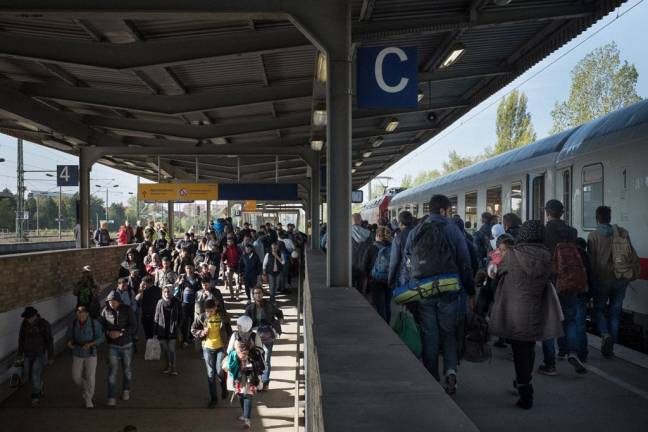
INTERNATIONAL – The United Nations General Assembly met today on tackling the global refugee crisis in the shadow of last week’s terrorist attacks in Paris and Beirut, with top officials pleading that the door for genuine refuge not be slammed shut in the name of security.

“How are we to balance security needs and moral and legal obligations to protect refugees and others in need of protection?” Deputy Secretary-General Jan Eliasson asked the informal meeting, which had been scheduled before last week’s attacks, to discuss ways to advance and finance a ‘Comprehensive Response to the Global Humanitarian and Refugee Crisis.’

“This balance must be found without giving in on our basic values and without closing the door to those who have already endured tremendous suffering,” he said.

“Those who flee this violence should not be punished twice – first by war or oppressive forces which persecute them at home. And, second, by unjust, dangerous stigma which even shockingly associate the refugees with their attackers. The refugees, if any, understand better than anyone the barbaric cruelty of violent extremism.”

General Assembly President Mogens Lykketoft also addressed the security issue, which has seen calls after the attacks for limiting refugee access lest terrorist infiltrate among them.

“In no way do those attacks reduce the moral and legal obligations of the international community towards displaced people,” he stressed. “On the contrary, they serve to underline even further why so many people are risking their lives to secure international protection and why we – the international community – must not fail them, for a second time.”

Mr. Eliasson noted that not since the end of the Second World War have so many people – more than 60 million – been forcibly displaced around the world.

“We face the challenge of saving lives and protecting the persecuted and the vulnerable – the children, women and men who have fled bombardment and death and unbearable conditions at home as well as those who are now falling prey to unscrupulous criminal traffickers,” he said.

“The recent terrorist attacks are urgent reminders of the need for migration and refugee flows to be managed properly and with respect for humanitarian and refugee law as well as for human rights. Our most effective response to these attacks is to stand even firmer in our humanistic and humanitarian resolve and ensure openness and protection to those in desperate need.”

Turning to the meeting’s principal goal of dealing with the overall humanitarian and refugee crisis, Mr. Eliasson stressed the vital need for financing. “The gap between humanitarian needs and available funds has never been higher that it is today,” he stressed.

He praised the continued resilience of host communities to refugees – from Kenya, Ethiopia to Pakistan, from Iraq and Iran to Bangladesh, from Greece, Italy, Germany and Sweden to Turkey, Jordan, Lebanon and beyond.

“These are some of the countries taking on more than their share of a global responsibility. It is time for the world to show greater solidarity and come together in a global compact to provide support, protection and asylum,” he declared.

“Let me admit that our current policies do not rise to the challenge before us. The challenge will not be met by sealing borders, building fences, or taking a strict security approach to the movement of refugees and migrants. Instead, we must expand safe and legal paths to safety that put middlemen and traffickers out of business.”

He called for better reception centres and claims processing, creative solutions to find sufficient places of refuge through resettlement, private sponsorship, humanitarian visas, family reunification and other means, and more opportunities for local integration and access for refugees to job markets.

History shows that migrants and refugees bring to their communities social, cultural and economic enrichment and play a key role in remittances sent home for development. “Raising awareness of these positive contributions and countering hateful and xenophobic speech is a moral duty, but also a matter of global economic and social growth,” he stressed.

He also called for more preventive measures, investing more in cooling tensions before they erupt into full-blown crises, and highlighted the urgency of developing a new global compact for human mobility based on fairly sharing responsibility, a call echoed by Mr. Lykketoft, who said the crisis requires short, medium and long-term action to tackle the root causes of displacement.

“Resolving conflicts, preventing violent extremism and supporting long-term development are central aspects of this comprehensive response,” he added, calling for additional steps to protect the displaced, predictable and adequate financing for humanitarian action, and support for those countries bearing the greatest burden in this global crisis.

In her remarks, Helen Clark, Administrator of the UN Development Programme (UNDP) recalled that on 9 November, she had opened a Resilience Development Forum, for the Syria crisis convened by UNDP and hosted by the Government of Jordan.

This Forum brought together a wide range of partners responding to the crisis to discuss the lessons learned and to chart the way forward for the resilience-based approach. “I urge the international community to explore ways to increase support for these approaches. It is important to support the capacity of national and local authorities in host countries to lead and co-ordinate effective responses to crises, and to increase private sector engagement in the recovery and development processes,” she said.

Further, just last week, Miss Clark participated in the Valletta Summit on Migration in Malta, which brought together European and African Heads of State and Government in an effort to strengthen co-operation and address the current challenges, but also the opportunities of migration. “I was pleased to note the commitment of countries of origin, transit and destination to find durable solutions to address the root causes of displacement,” she added.

“In conclusion, let me reaffirm UNDP’s commitment to step up its efforts in support of durable solutions to host communities and countries which are bearing the greatest burden and to look at how the people within countries in the epicentre of a crisis, like the nineteen million Syrians still in Syria, can be supported,” she said, stressing that the longer term answers lie in building peaceful and inclusive societies which offer people the opportunity and security they need for sustainable development.

Read more...

Ensuring 15,000 survivors have support they need is ‘my priority number one’ – UN envoy on Ebola

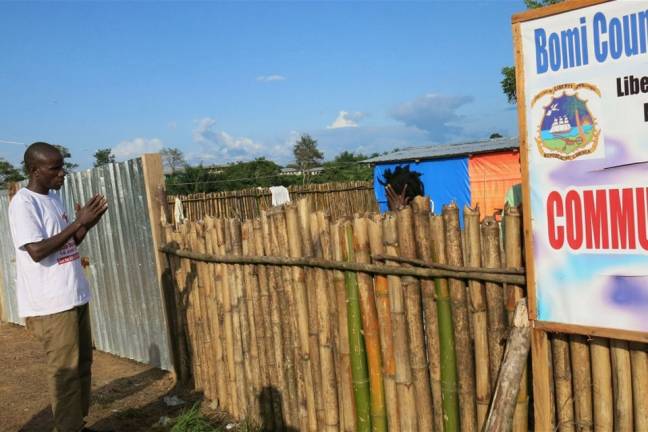
INTERNATIONAL – Transmission of Ebola has been stopped in Liberia and Sierra Leone, while Guinea is now treating a baby believed to be its last case, the United Nations Special Envoy on Ebola, Dr. David Nabarro, reported on Wednesday, underscoring that his top priority is to make sure the thousands of survivors and their families across West Africa have access to the support they need.

“More than 15,000 people who had Ebola that survived still face a lot of challenges,” Dr. Nabarro told a press conference at UN Headquarters. “There are risks that they face; there are risks that their families face. And there are risks that they might unwittingly pose to other people.”

Saying “they have a tough time” because “they’re distressed” and “not trusted,” as well as being “a subject of a lot of stigma, Dr. Nabarro said he wants to be sure that every person who survived Ebola can access a comprehensive package of care that helps them, and that help their communities.

“That means that all those who survived, need to be helped to maintain hygiene, and also if they are meant to practice safe sex, they need proper counselling and follow-up testing,” he said. “They need eye care because we know that vision can suffer after Ebola. They need medical support. Often they have terrible joint pains. They need sexual health systems. They need psychosocial support. Sometimes they need economic support.”

“And, they really need to be treated as the heroes of the outbreak,” which killed more than 11,300 people, he said. “So, trying to make sure that survivors and their families can access the support they need is my priority number one.”

“My priority number two is that I want to be sure, that in all the affected countries there is capacity to protect, to detect and to respond in place, so that if there is any resurgence, and any report of suspected new cases, the response is there and that we don’t get caught unaware,” the envoy said. “So, together with my colleagues I’ll be checking up to see and to ensure that rapid response capacity is in place.”

Continuing, Dr. Nabarro explained that his third priority is to honour those who have been affected by this outbreak and to make sure that the world can deal with this kind of problem better in the future.

And as part of the last priority, the envoy said the Advisory Group on the Reform of the agency’s work presented its first report to the UN World Health Organization (WHO) Monday, with three key recommendations, which he highlighted:

  • The first is that WHO must ensure that it’s always neutral, independent, [and] free of any kind of political control when it is making judgements about health risks and sharing those with the rest of the world;
  • Secondly, WHO needs a powerful programme of outbreaks and emergencies that is integrated across the whole organization with the staff and finance that it needs to respond to threats the kind we have seen with Ebola;And third is that we are calling for an independent oversight group to be set-up to help the Director-General of WHO and its members to be sure that it is performing in a way that the world needs.
    • that it has standby partnerships agreements with organizations involved in humanitarian and infectious disease work throughout the world that can be activated when needed;
    • that it has funds that it requires that can be promptly disbursed and accessed as soon as there is an alert;
    • and that it participates as leader of the humanitarian community in case of health threats;

Meanwhile, Dr. Nabarro said while the Ebola outbreak in the worst affected countries in West Africa is “not completely over,” he said the transmission of the virus has stopped in Liberia and in Sierra Leone” and in Guinea, “the last confirmed infected person in Guinea – is a three week old girl called Nubia.”

“Unfortunately, her mother died but she is in a treatment unit in Conakry and she tested negative for the second time on Monday,” he said. “We are hopeful that she will be the last case in Guinea.”

Read more...

Special UN event stresses key role of water management in tackling challenges of climate change

INTERNATIONAL – The United Nations Secretary-General Ban Ki-moon hosted a meeting on the links between water management and disaster risk reduction on Wednesday, stressing that floods, droughts and cyclones have caused more than $1 trillion in damages and affected over 4 billion people since 1990.

“The poor and most vulnerable have suffered first and worst,” he told, the second meeting convened as part of the UN High-Level Water and Sanitation Days 2015, a set of coordinated events taking place from 18 to 20 November at UN Headquarters in New York. The events coincide with final meeting of the Secretary-General’s Special Advisory Boardon the issue.

“Issues of water and disaster resilience are so intimately related that it is impossible to think of one without the other. Yet too often we do, by thinking in silos and responding in fragmented ways. It is time to close these conceptual and operational gaps.”

Today’s meeting comes just 12 days before the opening of the UN climate change conference, widely known as COP21, in Paris, where world leaders will strive to develop a plan to mitigate global warming and its concomitant effects, which scientists say will include more devastating droughts, catastrophic flooding and destructive cyclones.

Mr. Ban highlighted the vital role that water management and disaster risk reduction play in ensuring food security, increased access to energy, and in tackling the challenges of rapid urbanization.

“Investments in climate resilience and disaster risk reduction can also help combat climate change, save lives and avoid the destruction of vital infrastructure,” he said.

He appealed for global commitment to the 2030 Agenda for Sustainable Development and the frameworkaccord adopted in March at the Third United Nations World Conference on Disaster Risk Reduction , in Sendai, Japan, in which water management and disaster risk reduction are fully integrated.

“Member States have put in place a set of goals and targets that encourage cross-sectoral thinking in both the understanding of risks and our approach to managing them. They encourage whole-of society efforts that engage science, civil society and the business community to work in partnership,” he said.

“Let us build on the Sendai Framework of Action and Agenda 2030. Let us make the most of the climate change conference that opens in Paris in just 12 days,” he added. “Solutions exist. We have the tools. Our challenge is to connect the dots and work in an integrated manner towards the goals we share.”

In his remarks to the event, General Assembly President Mogens Lykketof said those taking part in the high-level discussions must dedicate themselves to 15 years of targeted and transformative action. Governments need to respond to the SDG goals and targets, meet the commitments they made in Addis and take the necessary measures to mainstream disaster risk reduction into their planning and activities.

“Other stakeholders – civil society, the private sector, particularly insurance companies – must also examine what changes they themselves must undertake and what changes they can help bring about,” he said, stressing that such multi-stakeholder action will be at the heart of a high-level thematic debate he will hold on 11-12 April.

It will focus on sustainable consumption and production, on technology, infrastructure, gender equality, taxation and aligning private sector activities with sustainable development objectives. And it will facilitate and highlight new strategic actions and partnerships to support implementation in these areas.

“Thereafter, the World Humanitarian Summit in May can mark a major turning point for a world struggling to adapt to humanitarian situations. And in October 2016, the Habitat III conference can demonstrate how all of these frameworks are leading to action in the area of housing and sustainable urban development.”

Also today, the Secretary-General’s Advisory Board issued its 10-year report in which it said water continues to be undervalued and badly managed despite a growing crisis with an increasing number of people living under water stress, worsening flood and drought catastrophes, degrading ecosystems, and exacerbated political tensions in water-scarce areas.

“We have not paid enough attention to the ground rules of sharing water – across sectors, and across regional or national boundaries,” it added, stressing that it had to convince the most senior decision-makers of the centrality of the water issue. “Lack of adequate access to drinking water and sanitation plagues billions of people, especially the poorest.”

It highlighted the urgency of ensuring safe, uncontaminated drinking water, providing proper sanitation and toilets not only in the home but in schools, clinics, workplaces and markets, dedicating increased funding and preventing water pollution through waste-water treatment and safe reuse.

“Governments must take proactive and preventive action on growing water-related risks – Governments still lagging behind must fast-track institutional reforms for better management and enhanced accountability. Th¬ey must boost funding and strengthen capacities, especially in water-related statistics and administrative monitoring,” the Board concluded.

It also called on the UN to better address water-related risks. “Considering that a lot of UN organizations deal with water but only as a marginal issue, nothing less than a full-scale water-cultural revolution within the UN is needed,” it warned.

“Relevant UN organizations need to allocate (more) core funding to water and need to review their policies. It is, for example, high time that WHO (UN World Health Organization) endorsed water, sanitation and hygiene as primary prevention.”

Its recommendations include setting up a UN inter-Governmental committee and a scientific panel on water and sanitation, strengthening UN-Water, the UN inter-agency coordination mechanism for all freshwater related issues, and establishing a comprehensive and independently reviewed global monitoring framework.

“Adequate sanitation, healthy aquatic ecosystems and sound water management are essential for human well-being and sustainable development,” Mr. Ban said in a foreword to the report. “Yet increasingly, water-related problems are putting countries, ecosystems, economies and citizens, especially women and children, at risk.”

Read more...

On World Day, UNESCO hails philosophy as 'force for individual and collective emancipation'

INTERNATIONAL – Marking the World Philosophy Day, the Director-General of the United Nations Organization for Education, Science and Culture (UNESCO), Irina Bokova, has stressed that sustainability calls for new ways of thinking about ourselves and the planet and as such, “philosophy and all the humanities will be essential.”

“The conviction that philosophy can make an essential contribution to human well-being, to addressing complexity, to advancing peace stands at the heart of World Philosophy Day,” the head of UNESCO said in her message for this year's celebration.

Ms. Bokova pointed out that UNESCO puts philosophy forward as a force for individual and collective emancipation. 'For to think, while reflecting on what it is to think, is to philosophize, and all of us do it constantly, driven by the truest motor of all human ingenuity – wonder.”

World Philosophy Day has been observed every third Thursday of November since 2002. Philosophy is dialogue of wonder, across the ages, with art and literature, in social debates, on political questions, practiced by all, without specialized training, far beyond the classroom.

“We must raise the flag for philosophy as high as possible, to engage every woman and man, and especially every girl and boy. We need to share the wonder of philosophy more widely and differently,” declared the UNESCO chief.

Ms. Bokova said the agency was continuing its long-standing cooperation with the networks of philosophy teachers. “We are working to make philosophy, the most ancient of disciplines, reach broader audiences thanks to cutting-edge technologies – for instance, through online teaching tools based on the 2015 UNESCO South-South Philosophical Manual.”

According to UNESCO, all activities celebrating this year's World Philosophy Day will emphasize the use of new communication technologies to engage global audiences. To celebrate the Day, many events will be hold in Paris, where UNESCO is headquartered, as well as in Dakar, Brasilia, and a number of other cities on all continents.

The 2030 Agenda for Sustainable Development, agreed by UN Member States in September, created a new vision for people, prosperity, peace, and the planet for the next 15 years. Taking this to fruition, Ms. Bokova said, requires all the skills philosophy can hone, including rigour, creativity and critical thinking.

“Sustainability calls for new ways of thinking about ourselves and the planet. It requires new ways of acting, producing and behaving. Here again, philosophy and all the humanities will be essential,” she added.

 
Read more...

Governments, tech companies commit to protecting children from online sexual exploitation – UNICEF

INTERNATIONAL – At the #WeProtect Children Online Global Summit hosted by the United Arab Emirates and the United Kingdom in Abu Dhabi, leading information technology companies, governments and international organizations today pledged to protect millions of children from online sexual exploitation, said the United Nations Children’s Fund (UNICEF).

“Children make up one-third of all Internet users globally. With the rapid expansion of communication technologies shrinking the digital divide, protecting children online is an urgent global priority,” said UNICEF Deputy Executive Director Fatoumata Ndiaye in a news release.

According to UNICEF, governments in every region of the world have agreed to establish coordinated national responses between criminal justice systems, law enforcement agencies, frontline social service providers and education sectors to better protect children online.

The 17 countries in the UNICEF Global Programme to protect children from online sexual exploitation of children are; Albania, Algeria, Brazil, Dominican Republic, El Salvador, Guatemala, India, Jordan, Kenya, Madagascar, Montenegro, Namibia, Paraguay, the Philippines, Serbia, Uganda, Viet Nam.

Additionally, leading technology companies including Apple, Facebook, Google, Microsoft, Twitter and Yahoo have also pledged to keep children safe by developing new technology, tools and expertise, UNICEF said.

“Today’s commitments indicate strong political will from every region of the world and we encourage more countries to join this important global movement,” said Ms. Ndiaye.

According to UNICEF, there are high levels of sexual exploitation of children online and an average of five child victims of online sexual abuse are identified by Interpol and police partners every day.

Further, UNICEF research revealed that the number of webpages containing child sexual abuse material grew by 147 per cent from 2012 to 2014, with girls and children 10 years old or younger depicted in 80 per cent of these materials.

UNICEF said that at the first #WeProtect event last year, the United Kingdom Government pledged £50 million (approximately USD 71 million) to establish a Global Fund to End Violence against Children and an initial £10 million (USD 15 million) is supporting UNICEF’s ground-breaking global programme to protect children from online sexual exploitation in 17 countries and 6 regions around the world.

Since the commencement of the programme, progress has been made in several countries such as dismantling two networks that produced online child sexual abuse materials in Guatemala, undertaking a national study on online child protection in Philippines and establishment of a police unit on online crimes against children in Jordan.

“What happens in the online world is a reflection of society at large, as the dangers children face online are mirrored in the risks children face in their homes, schools and communities,” says Ms. Ndiaye.

Lastly, she stressed that protecting children online is a part of a growing global movement to keep children safe from violence, abuse and exploitation both virtually and physically.

Read more...

Refugees should not be turned into scapegoats following Paris attacks, says UN agency

INTERNATIONAL – The United Nations refugee agency today expressed its shock and horror at the attacks in Paris and the killing of so many innocent people but warned against the scapegoating of refugees, in the wake of the deadly attacks.

The United Nations High Commissioner for Refugees (UNHCR), António Guterres conveyed his solidarity with the Government and the people of France, as he did with the Government of Lebanon, following the recent Beirut attacks.

“We are deeply disturbed by language that demonizes refugees as a group. This is dangerous as it will contribute to xenophobia and fear. The security problems Europe faces are highly complex. Refugees should not be turned into scapegoats and must not become the secondary victims of these most tragic events,” said Melissa Fleming, UNHCR spokesperson at today’s Palais des Nations press briefing in Geneva.

Ms. Fleming cautioned against the reactions of some Member States to end the programs being put in place, backtracking from commitments made to manage the refugee crisis, such as relocation, or proposing the erection of more barriers.

At the same time, she also expressed concern by the yet unconfirmed news that one of the Paris attackers may have entered Europe as part of the current influx of refugees and migrants.

“We strongly believe in the importance of preserving the integrity of the asylum system. Asylum and terrorism are not compatible with each other,” said Ms. Fleming adding that the 1951 Refugee Convention excludes from its scope people who have committed serious crimes.

Ms. Fleming emphasized that the overwhelming majority of those coming to Europe are fleeing persecution or the life-threatening effects of conflict and are unable to reach safety in Europe by alternative avenues.

She also stressed that many people are fleeing from extremism and terrorism “from the very people associated with the Paris attacks.” The spokesperson also added that precarious conditions in countries of first asylum have also forced many to leave for Europe.

Additionally, Ms. Fleming recalled that Member States were urged to immediately put in place an effective reception, registration and screening mechanism immediately upon arrival of refugees and migrants, adding that eligible asylum-seekers must be provided protection and relocation services under the European Union (EU) plan.

“Relocation and other agreed measures can improve the management and stabilization of current flows of people. These measures include security measures and the proper registration of all those on the move,” Ms. Fleming added.

Further she said highlighted the urgent need to significantly “expand legal avenues, notably resettlement and humanitarian admission programs, as alternatives to the dangerous and irregular journeys while cracking down on smugglers.”

Lastly, Ms. Fleming reiterated that the security of societies and ensuring the integrity of asylum in Europe are objectives that are not incompatible and stressed that they are central to maintaining European core values and protecting the right to seek asylum.

Read more...

Biodegradable plastics are not the answer to reducing marine litter, says UN

INTERNATIONAL – Widespread adoption of products labelled “biodegradable” will not significantly decrease the volume of plastic entering the ocean or the physical and chemical risks that plastics pose to marine environment, accord to a United Nations report released today.

The report, entitled Biodegradable Plastics and Marine Litter. Misconceptions, Concerns and Impacts on Marine Environments, finds that complete biodegradation of plastics occurs in conditions that are rarely, if ever, met in marine environments, with some polymers requiring industrial composters and prolonged temperatures of above 50°C to disintegrate. There is also limited evidence suggesting that labelling products as “biodegradable” increases the public's inclination to litter.

Its launch marks the 20th anniversary of the Global Programme of Action for the Protection of the Marine Environment from Land-based Activities (GPA), an intergovernmental mechanism hosted by the UN Environment Programme (UNEP).

“Recent estimates from UNEP have shown as much as 20 million tonnes of plastic end up in the world’s oceans each year,” said UNEP’s Executive Director Achim Steiner in a press release.

“Once in the ocean, plastic does not go away, but breaks down into microplastic particles. This report shows there are no quick fixes, and a more responsible approach to managing the lifecycle of plastics will be needed to reduce their impacts on our oceans and ecosystems.”

In 2014, a study by UNEP and partners estimated that about 280 million tonnes of plastic is produced globally each year and only a very small percentage is recycled. Instead, some of that plastic ends up in the world's oceans, costing several billion dollars annually in environmental damage to marine ecosystems.

In recent years, concern has reportedly grown over microplastics, which are particles up to five millimetres in diameter, either manufactured or created when plastic breaks down. Their ingestion has been widely reported in marine organisms, including seabirds, fish, mussels, worms and zooplankton.

The new report aimed to verify a thesis that plastics considered “biodegradable” may play an important role in reducing these negative environmental impacts.

It finds that plastics most commonly used for general applications, such as polyethylene (PE), polypropylene (PP) and polyvinyl chloride (PVC) are not biodegradable in marine environments. Polymers, which biodegrade under favourable conditions on land, are much slower to break up in the ocean and their widespread adoption is likely to contribute to marine litter and consequent undesirable consequences for marine ecosystems.

The study also analyzes the environmental impacts of oxo-degradable plastics, enriched with a pro oxidant, such as manganese, which precipitates their fragmentation. It found that in marine environments the fragmentation is fairly slow and can take up to 5 years, during which the plastic objects continue to litter the ocean.

According to UNEP, oxo-degradable plastics can pose a threat to marine ecosystems even after fragmentation. The report says it should be assumed that microplastics created in the fragmentation process remain in the ocean, where they can be ingested by marine organisms and facilitate the transport of harmful microbes, pathogens and algal species.

The report also cites research that suggested some people are attracted by “technological solutions” as an alternative to changing behaviour. Labelling a product as biodegradable may be seen as a technical fix that removes responsibility from the individual, resulting in a reluctance to take action.

Read more...

Access to higher education doesn’t always lead to lower unemployment – UN labour agency

INTERNATIONAL – Workers with post-secondary education are more likely to be unemployed in lower-income countries, reflecting a “mismatch” between skilled persons and the number of available jobs matching their competencies and expectations, according to the International Labour Organization (ILO).

The 9th edition of the ILO’s Key Indicators of the Labour Market, released Monday, said the educational level of the labour force is improving worldwide but access to a higher education is not leading to lower unemployment at the global level.

“This reflects a mismatch between skilled persons and the number of available jobs matching their competencies and expectations, and unless addressed may work to put a limit on economic growth and development,” according to Rosina Gammarano, from the ILO Department of Statistics.

According to the report, which is part of the broader ILO statistical database, all but two of 64 countries with available data have registered an increase in the share of the labour force with a tertiary education over the past 15 years.

The biggest increases were seen in Canada, Luxembourg and Russia, it said.

At the same time, the report said, there has been a drop in the share of labour market participants with only a primary-level education or less.

But workers with secondary-level education do not automatically have a better chance of finding a job.

“While they are less likely to be unemployed in most high-income economies, tertiary graduates in low- and lower-middle-income economies are actually more likely to be among the unemployed than workers with lower educational levels,” it said.

The report also provides data on the share of youth who are not in education, employment or training, one of the proposed indicators that will be used for monitoring the 2030 Agenda for Sustainable Development.

Other key findings:

  • The median unemployment rate across 112 countries with comparable unemployment rate data increased from 6.4 per cent in 2007 to 7.2 per cent in 2014.
  • The average worker in a high-income country currently produces 62 times the annual output of an average worker in a low-income economy and 10 times that of an average worker in a middle-income economy.
  • However, middle-income economies have registered the fastest productivity growth over the past 15 years.
  • Manufacturing employment in high-income economies has declined by 5.2 million since 2000, while it grew by 195 million in middle-income economies.
  • As of 2015, 72 per cent of workers in the world are employed in middle-income economies, 20 per cent in high-income economies and 8 per cent in low-income countries.
  • The number of working poor (living on less than $2 per person, per day) declined by 479 million between 2000 and 2015. Virtually all of the decline was in middle-income countries.
  • The report includes the first-ever estimates of the size of the labour force (employed + unemployed) across different income classifications, making it possible to determine the percentage of workers throughout the world that are in high-income, low-income, lower-middle income and upper-middle income economies.
Read more...
Subscribe to this RSS feed

Soualiga Radio